AI Search
Is Your Local Business Ready for AI Search?
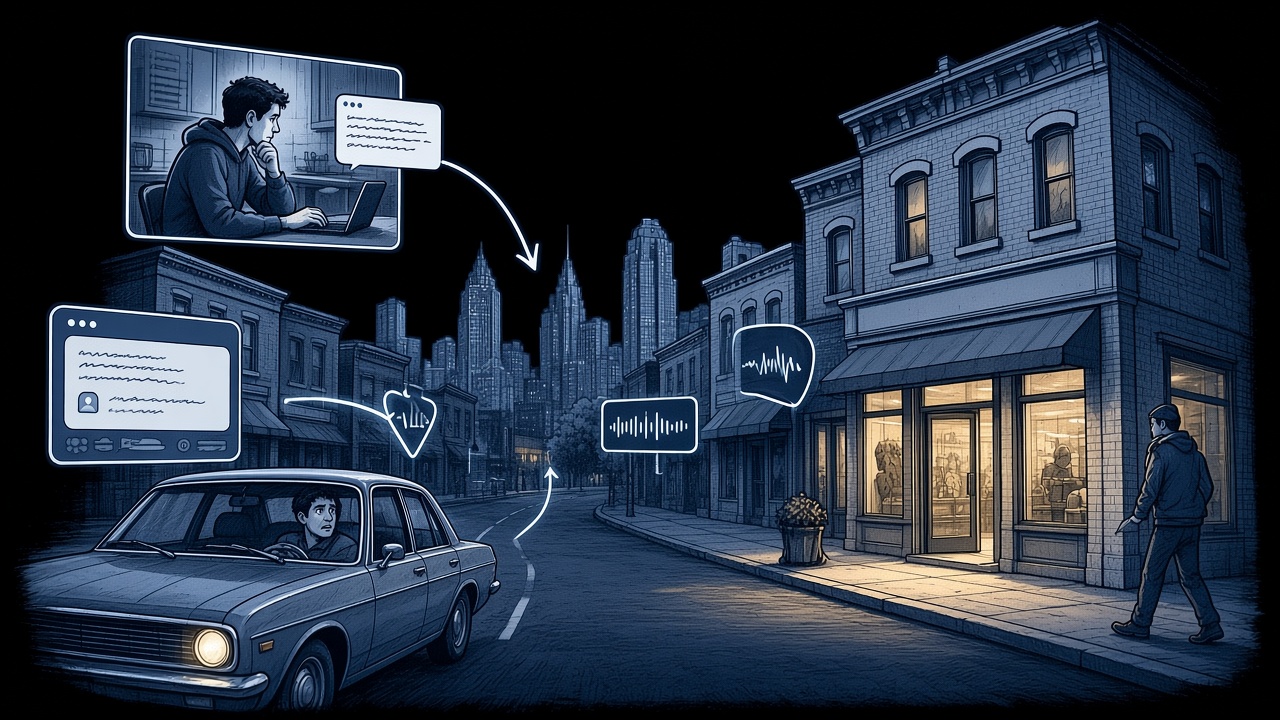
Customers are asking ChatGPT, Google’s AI answers, maps, and voice assistants where to go. If your business is only built for ten blue links, you are already behind the question.
By Travis Avery · August 18, 2026 · Updated September 15, 2026 · 6 min read
Key takeaways
- AI answers pull from clear, consistent, structured information — not from decorative websites.
- Readiness is a content and systems problem, not a prompt-engineering hobby.
- If a stranger (or a model) cannot tell what you do, where you do it, and how to become a customer, you are not ready.
The practical question is not “will AI replace Google?” It is simpler: when someone asks an assistant for a business like yours, does your information exist in a form that can be trusted?
That is AI search readiness. It is not a score we invent to frighten you. It is a yes-or-no on public facts: services in HTML, listings that match the site, a next step that still works at 9 p.m. on a Saturday.
What AI search actually is for local businesses
People still Google. They also ask ChatGPT, Perplexity, Gemini, Apple Intelligence, in-car assistants, and the AI overviews sitting on top of traditional results. Maps and voice remain in the mix.
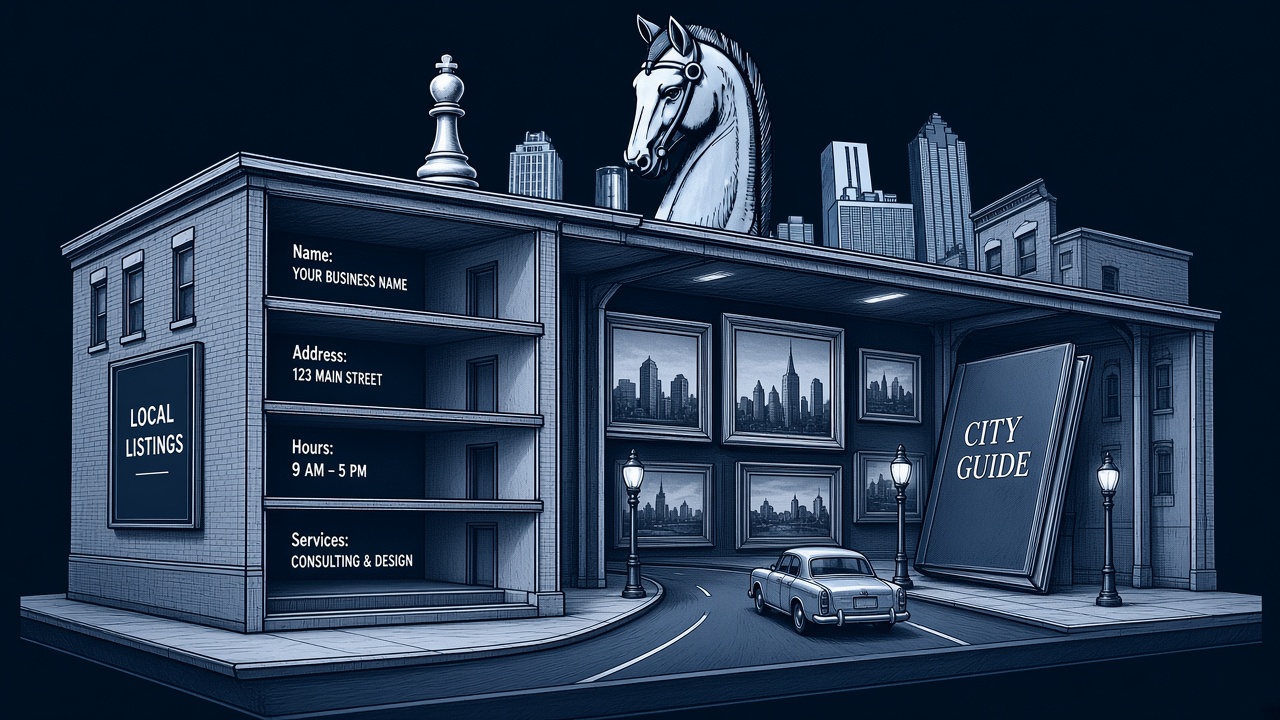
Those systems do not “visit your vibe.” They look for entities they can resolve: a business name, a location, a category, a service list, hours, and corroborating pages.
AI search.
The set of assistants, answer engines, and overviews that recommend local businesses from structured and unstructured web information rather than from a list of ten links alone.
If your business is only built for ten blue links, you are already behind the question. The click still matters. The recommendation increasingly happens before the click — in a spoken answer, a map card, or a shortlist of three names.
Preparing a website for AI search is therefore not a plugin. It is the same discipline as being a business someone can describe accurately: what you do, where, for whom, and how to start.
AI search readiness checklist
Ask these in order. Be honest.
- Can a human on a phone understand what you sell in five seconds? If not, a model will not either. This is the same first-screen test as website conversion.
- Are your name, address, phone, and hours identical everywhere they appear? Inconsistencies look like two businesses. Assistants notice.
- Are services described in HTML, not only in images, PDFs, or Instagram captions? Machines read text. A photo of a menu is not a menu.
- Is there a conversion path that does not depend on “someone will call back later”? Speed still wins. The business that answers first increasingly gets the job.
- Would you be comfortable with an assistant quoting your site verbatim? If the copy is vague, the quote will be vague — or the assistant will quote a competitor who was specific.
If you cannot check those five boxes, you are not ready for AI search. Buying a chatbot will not fix it. Neither will a blog calendar of unspecific posts.
Where local businesses usually break
The website is a brochure. The Google Business Profile is a different name. The menu is a photo. The “Contact us” form emails a mailbox nobody checks on Saturday. None of that is a technology mystery. It is an operations problem with a public website on top.
Those breaks show up in three places:
Invisible information. If services, location, expertise, and availability cannot be interpreted clearly, AI systems have less confidence recommending you. Local SEO and AEO exist to make that information findable and citable. See AEO vs. SEO for how those jobs split.
Fragmented systems. Leads disappear when websites, calendars, inboxes, and follow-up do not communicate. Automation is the unglamorous layer: missed-call routing, intake, scheduling — not a novelty assistant.
Slow response. Being recommended is useless if the recommended business does not pick up. AI search increases the cost of a dead form, because the customer may never see your ads again. They asked once, got a name, and moved on.
MoreLocal’s work sits at that intersection: the page the customer sees, the facts machines need, and the system that answers when someone reaches out.
How to prepare your website for AI search
Do this in order. Skip the theater.
1. Make the entity obvious. One legal-looking business name, one primary location story, a real service area, a person when there is an owner. Publish it in HTML on the site and match it on the listings.
2. Give each important service a page. Not a sentence in a glob. A page with what you do, where, what happens next, and a way to book or call. That is also how you stop losing people who landed on the wrong paragraph of the homepage.
3. Answer the front-desk questions in public. Insurance, deposits, after-hours, parking, what suburbs you cover, whether you take new customers this week. Short answers under headings. FAQ only for questions you actually get.
4. Put facts where machines can read them. Schema that matches the page. No fake stars. No invented FAQs. Hours in text. Phone as a tel: link. If it is only in a JPEG, it does not exist for AI search.
5. Confirm a human — or a system — still answers. Readiness includes the ten minutes after the recommendation. If the assistant sends someone to a form that sits until Monday, you were ready to be named and unready to be chosen.
For a public-facts pass on a URL, run the free AI website audit. For a working session on whether assistants can find and recommend you — not a live 100-point grader and not a ranking promise — use the AI visibility page and book the call.
FAQ: AI search readiness
Do I need to be on every AI platform?
No. You need a canonical, consistent source of truth: your website, your listings, and your service pages. Platforms will draw from that if it is clear.
Is this just SEO with a new acronym?
Local SEO still matters. AEO adds the requirement that answers, entities, and structure are explicit enough for assistants to cite. The work overlaps; the output is more than rankings.
How do I know if ChatGPT or Google would recommend my local business?
Ask the questions your customers ask, then compare the answer to your site and listings. If the assistant cannot name you, or names you with the wrong hours, you have an information problem — not a prompt problem.
Will a chatbot make my business ready for AI search?
Not by itself. A chatbot that cannot book, quote, or route is decoration. Readiness is pages, listings, and follow-through that an assistant can trust.